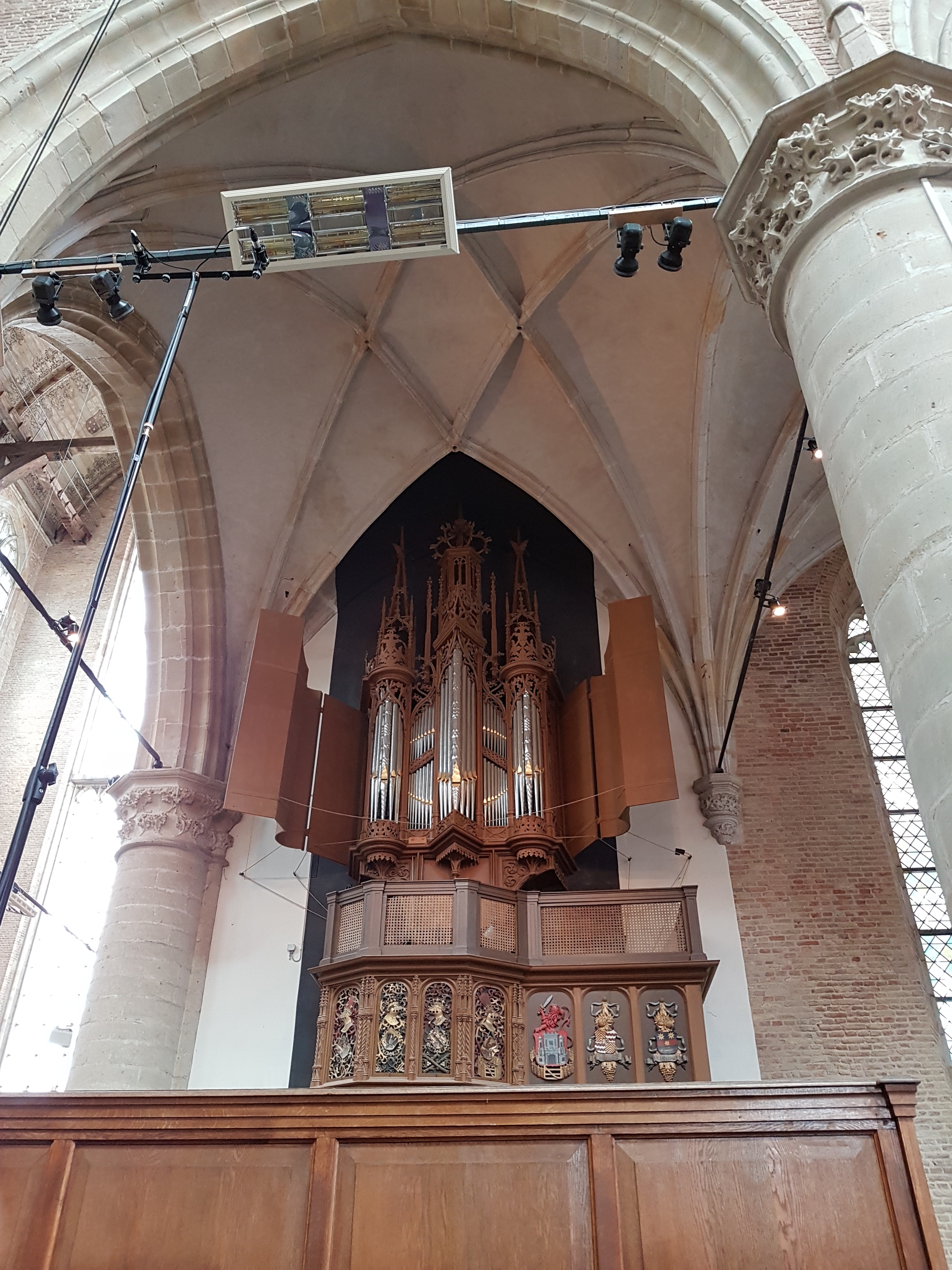
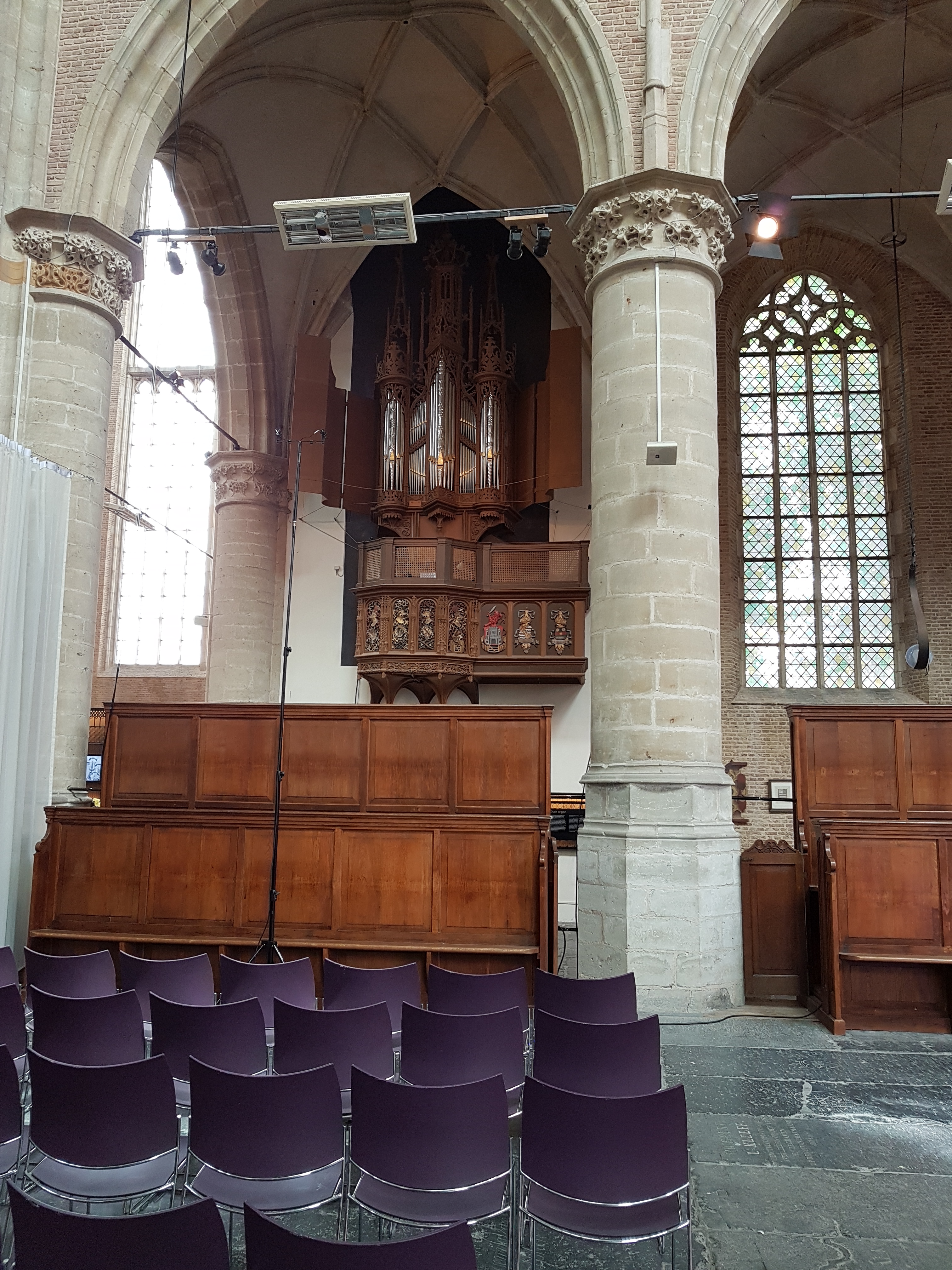
Located in Grote St. Laurenkerk, Alkmaar, Netherlands. Its current disposition is two manuals and pedalboard with a total of 13 stops.
It is a perfect exponent of the Dutch Renaissance Organ. In 1545 Kovelens pupil Claes Willemsz expanded the original set by his master by the addition of a Borstwerk (Brustwerk) and in 1551 a pedal trumpet was added by Allard Claesz, son of the latter. One of the most interesting features of Kovelens organ building mastery is the progressive doubling of the number of pipes per key ranging from the lowest to the highest pitches. After successive transformation along the centuries, It was finally restored back to its original state by the Dutch firm Flentrop between 1994-2000.
Contextual historical chronology
The organ was built the selfsame year of the publication of Arnoldt Schlick’s (1455-1521) treatise Mirror of the organ builder and organist.
1503: Leonardo da Vinci (1452-1519) The Mona Lisa.
1505: Hieronymus Bosch (1453-1516) The Garden of Earthly Delights.
1501: Ottaviano Petrucci (1466-1539) Harmonice Musices Odhecaton.
1503: Albrecht Dürer (1471-1528) Paumgartner Altar (Nuremberg).
1504: Michelangelo Buonarotti (1475-1564 ) David.
1511: Desiderius Erasmus (1466-1536) The Praise of Folly.
1512: Arnoldt Schlick (1455-1521) Tabulaturen etlicher Lobgesang. Michelangelo (1475-1564) Completion of The Sistine Chapel ceiling.
1514: Niccolo Machiavelli (1469-1527) The Prince.
1516: Sir Thomas More (1478-1535) Utopia. Ludovico Ariosto (1474-1533) Orlando Furioso. Hieronymus Bosch (1453-1516) Decease on August 9th.
1517: Martin Luther (1483-1546) Ninety-five Theses.
1519: Charles V (1500-1558) Emperor of the Holy Roman Empire. Leonardo da Vinci (1452-1519) Decease on May 2nd.
Click on the thumbnails to open

Listen to this organ
 sesquialteramusic