Lecture report
Title: Orgelbüchlein
Duration: One and a half hour.
The lecture sets on with a physical description of the book: 92 leaves, 19 X 15.5 cm. The English translation of Orgelbüchlein as “Litle organ book” is not accurate since in Germany the term büchlein means rathe notebook. This title is in contrast with the high and sophisticated quality of the musical contents of the book.
It is mentioned the importance of the chorale prelude as genuine church music as well as point of development of most of the organ music forms in Germany.
There are stages in Bach’s development of his compositional mastering of the chorale prelude:
- 1698-1703: Ordruf-Lünebourg. Experiments with chorales by others (the Neumeister collection); experience with the chorale partitas.
- 1704-1707: Arnstad-Mülhausen. Experience with the chorale fantasia (after Böhm) forerunners of the 18 Leipzig chorales.
- 1708-1717: Weimar. Orgelbüchlein.
- 1739: Leipzig. Clavierübung Teil 3. French organ book with Lutheran mass movements.
Thus, Orgelbücliein represents the most developed stage in Bach’s art of chorale settings.
The prototype: The rgelbüchlein chorale.
Differences with hitherto known chorale settings:
- Chorale melody in quarter-notes.
- 4/5 voices. All embracing polyphony. The most complex textures melodically conceived.
- Obligato pedal part.
- Symbolism through omnipresent rhythmic patterns. Sophisticated music expression: word-tone relationship. Music painting.
The lecture proceeds with a description of the book’s format and layout. The fact of having titles and staves drawn beforehand represents a compositional challenge in terms of physical limit to respect. There are chorale preludes which were copied from another source, some were composed directly on the book. Sometimes, title and music were set at once.
Concerning the contents and organisation of the book, it is noteworthy that Bach sought out to composed 164 chorales according to the number of titles hi introduced beforehand, of which he only achieved 46. Different reasons for that fact are attempted.
The written chorales are organised according to the church calendar:
- De Tempore chorales: 33
- Advent: 4
- Christmas: 10. Includes Epiphany, Angel messenger, Adoration, Contemplation.
- New Year: 3.
- Purification: 2 (song of Simeon).
- Passion: 7.
- Easter & Ascension: 6.
- Pentecost: 1.
B. Omne Tempore chorales (Trinity period): 12 = 13
- Trinity feast: 1.
- Catechism: 4 (Holy Baptism (2), Ten Commandments, Our Father).
- Faith & Justification: 3 (conduct, confession, penitence).
- Christian life: 5 (cross & comfort, time of need, trust, mortality & burial, vanity of life).
The chorales were set in several entries:
- Early: 1708-1712. 15 entries of different categories. First: n° 3.
- Middle I: 1712-1713. 19 entries / different categories. Middle II: 1715-1716. 4 entries / different categories. The gap: between Pentecost 1713 and Easter 1714 the organ of the Weimar chapel was stopped for renewal.
C. Late: 1716-1717. 7 entries / different categories.
D. Leipzig entries: 1726. 1 entry (New Year), 1 incomplete entry (Passiontide), 3 revisions (Pentecost, Passiontide, catechism). Leipzig revisions & entries can be determined by ink colour.
We distinguish different chorale types:
- Early & Middle I:
- 1. Versus chorale. Special type, OB versus.
- a) Chorale melody in one voice (mainly soprano), few ornaments or none, no interludes.
- b) Four-voice texture with obligato pedal.
- c) Alto & tenor assigned the same motives.
- d) Pedal assigned the same motif or another.
B. Middle II: More sophisticated techniques.
- Two-voice solo chorale (Bach’s invention). Alto is a harmonic filler of soprano chorale melody. Tenor & bass motivic. Interludes & introductory passages (do not begin with chorale line).
C. Late: More sophisticated techniques.
- In canon solo chorale (Bach’s invention).
About the purpose of the collection, the lecture mentions Bach’s interest in providing material for the daily and Sunday services in Weimar Court. There is evidence in the book that de tempore chorales were for the most important.
Finaly with respect to the book’s functions, it is obvious, according to the caption under the title, that Bach intended to set chorale preludes in all possible ways and forms useful for service practice. It is also mentioned the technical and compositional didactic functions of the book, as well as its liturgical and religious nature.
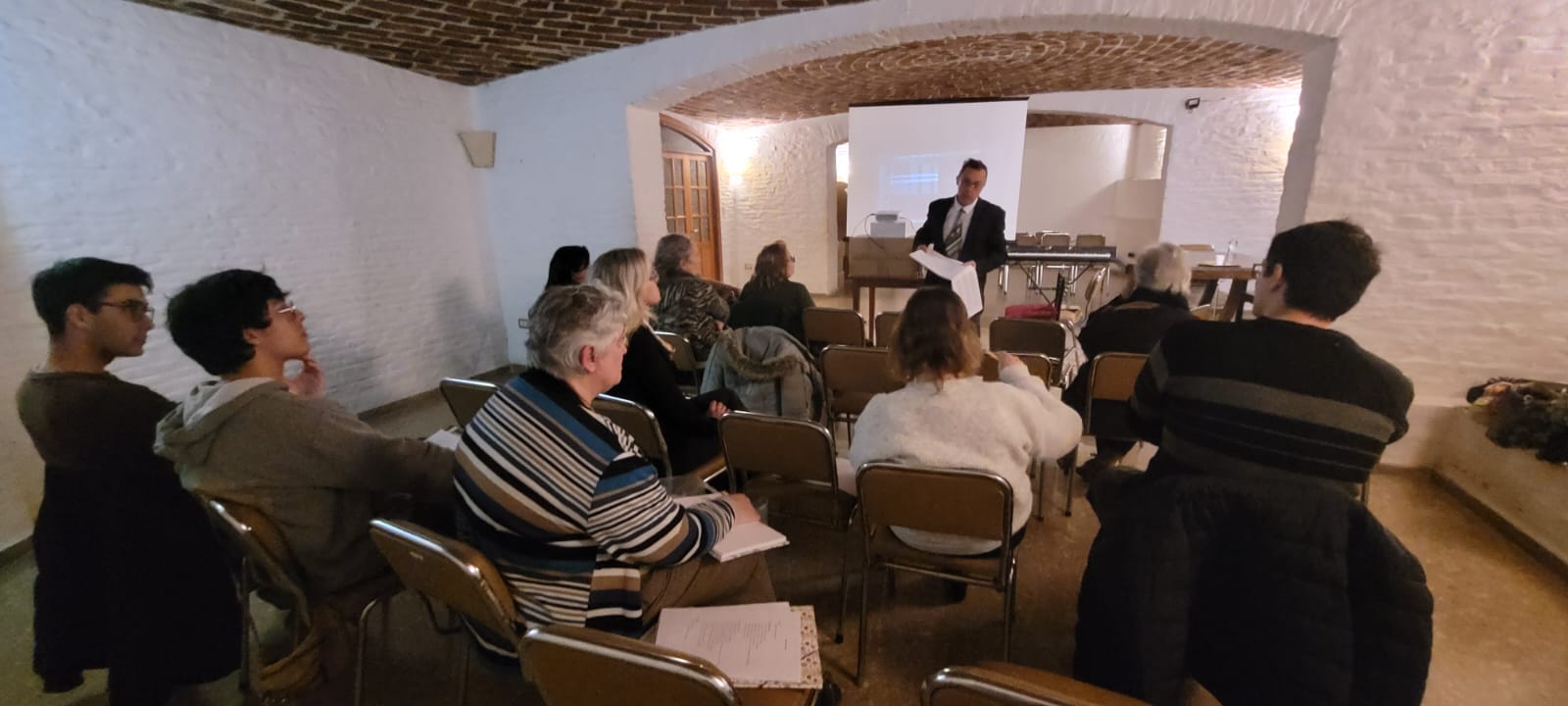
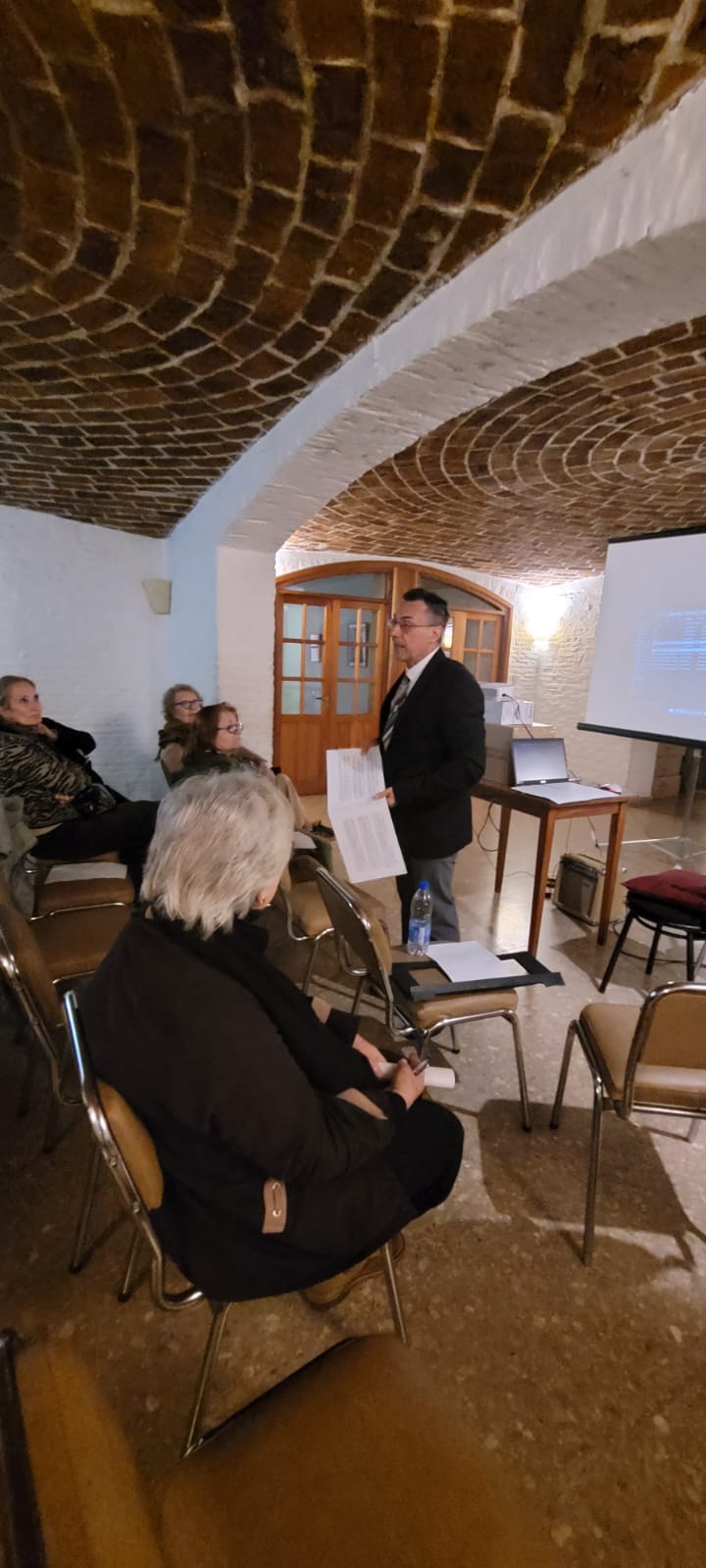
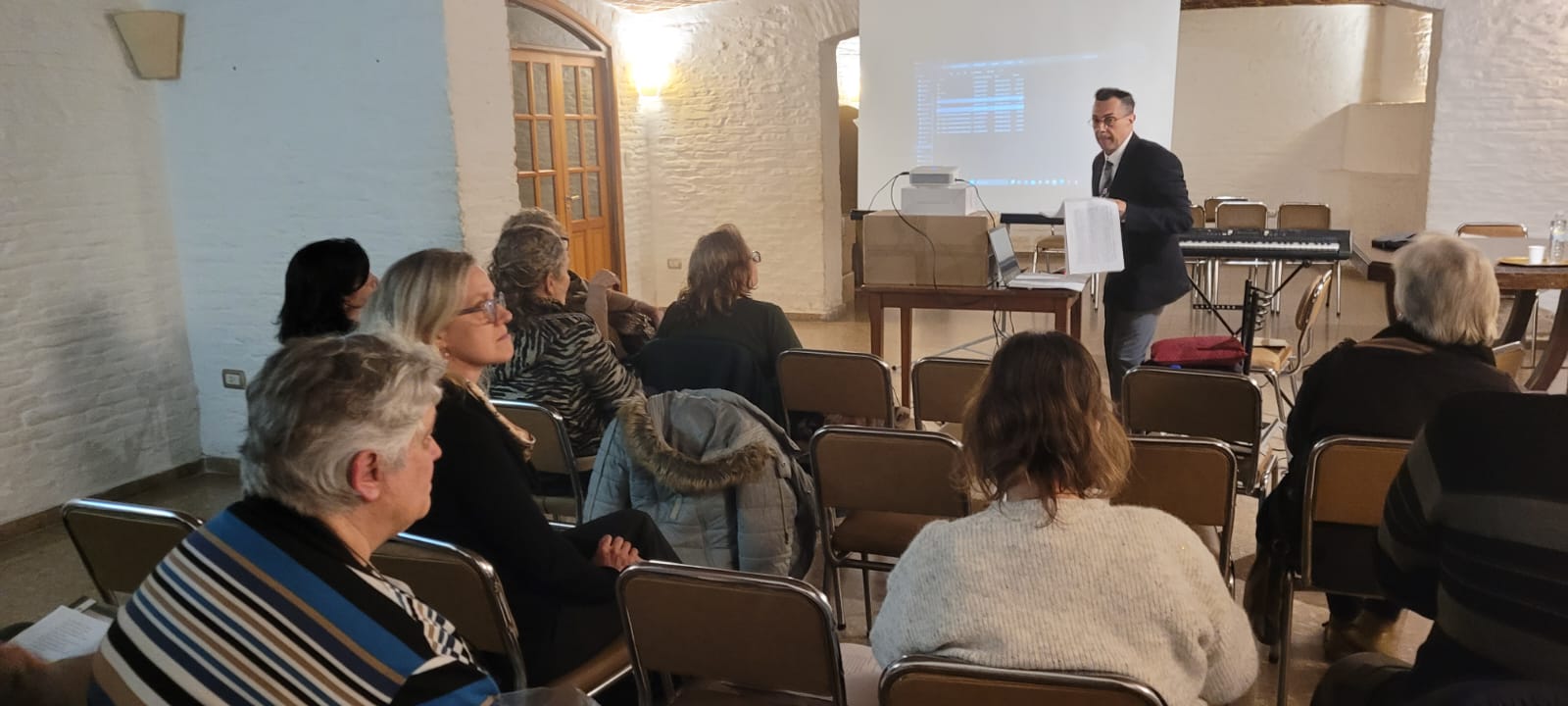
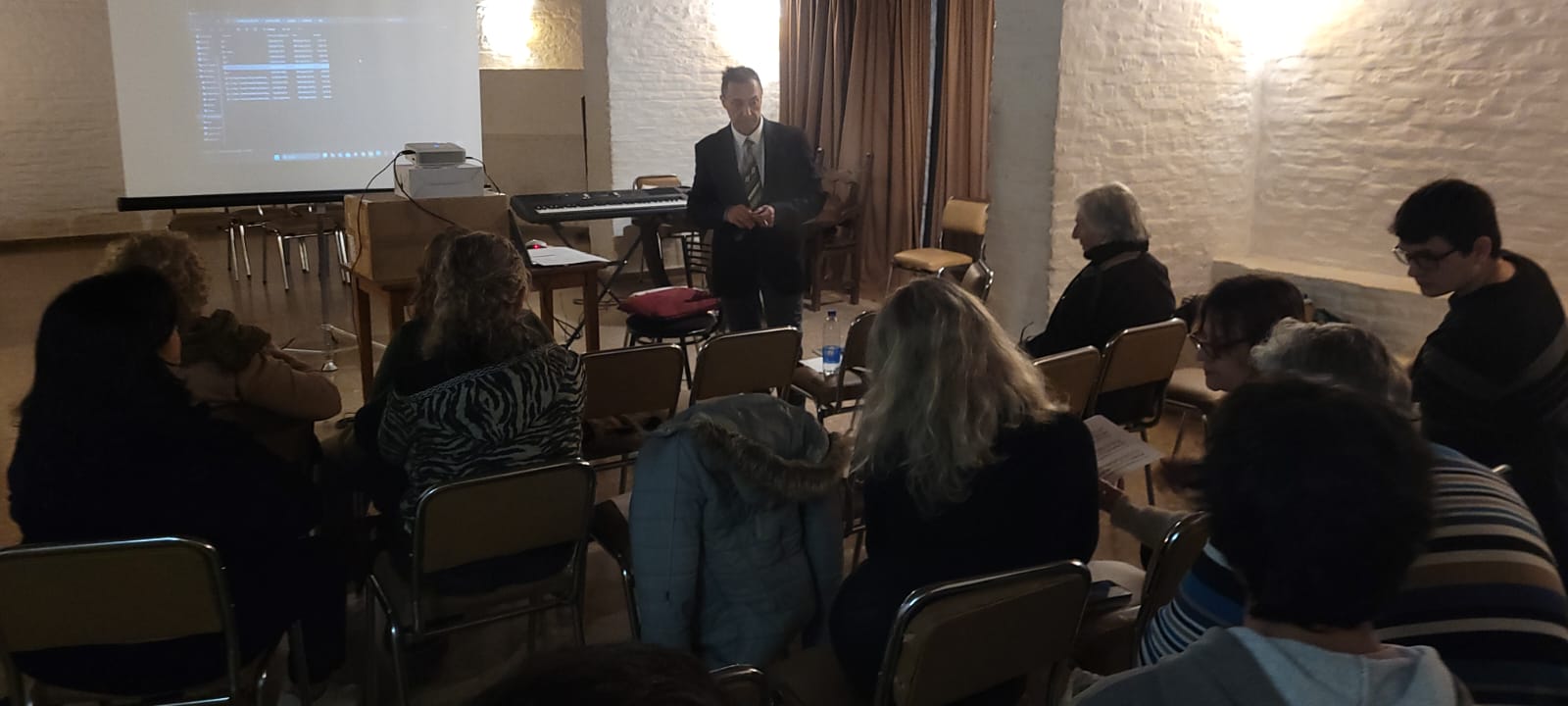
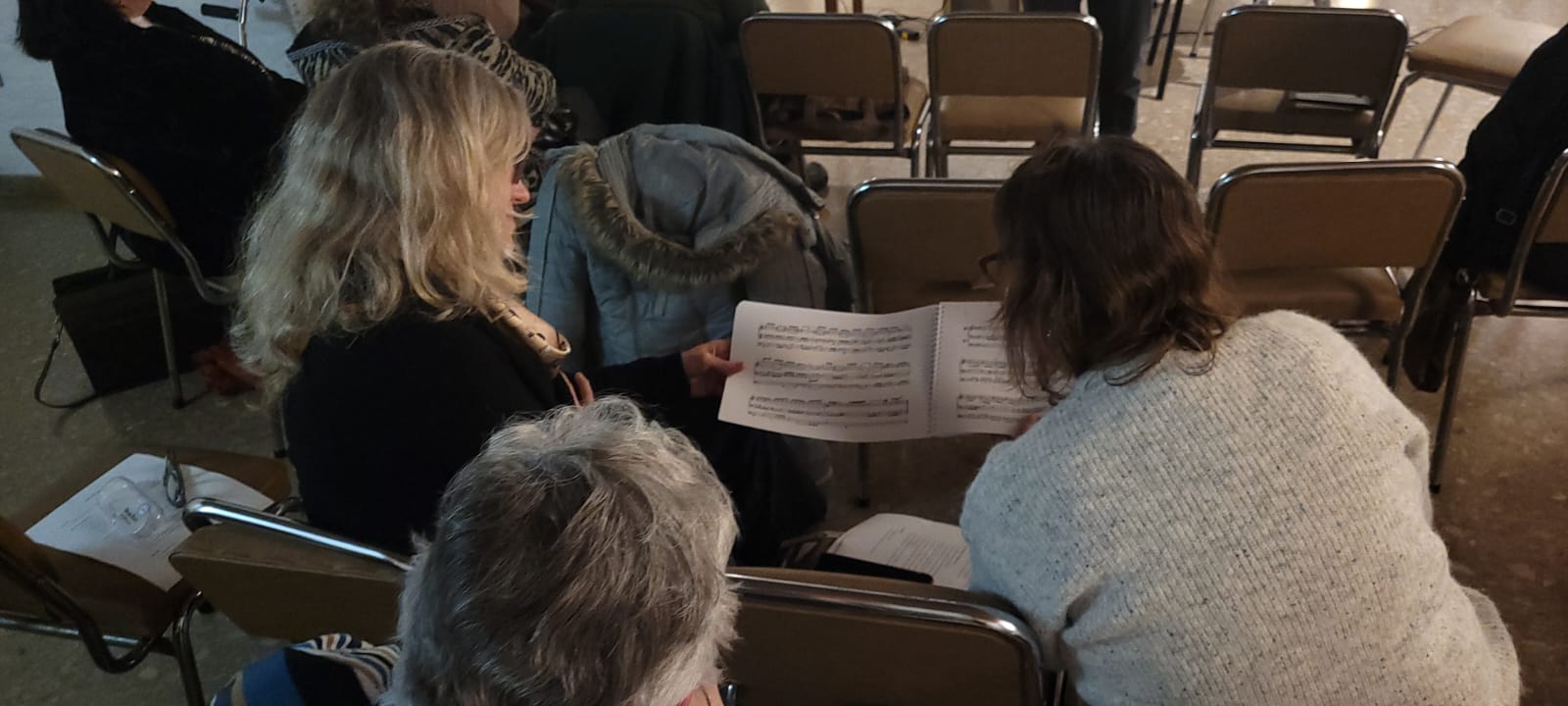
The lecture is illustrated with the Bach’s autograph manuscript of the Orgelbüchlein, as well as musical examples of the different types of chorales contained in the book. The lecturer also performed several examples.
Presentations
Date: September 27th 2026.
Location: Cathedral Foudation, La Plata, Argentina.
Flyer
Click on thumbnail to open