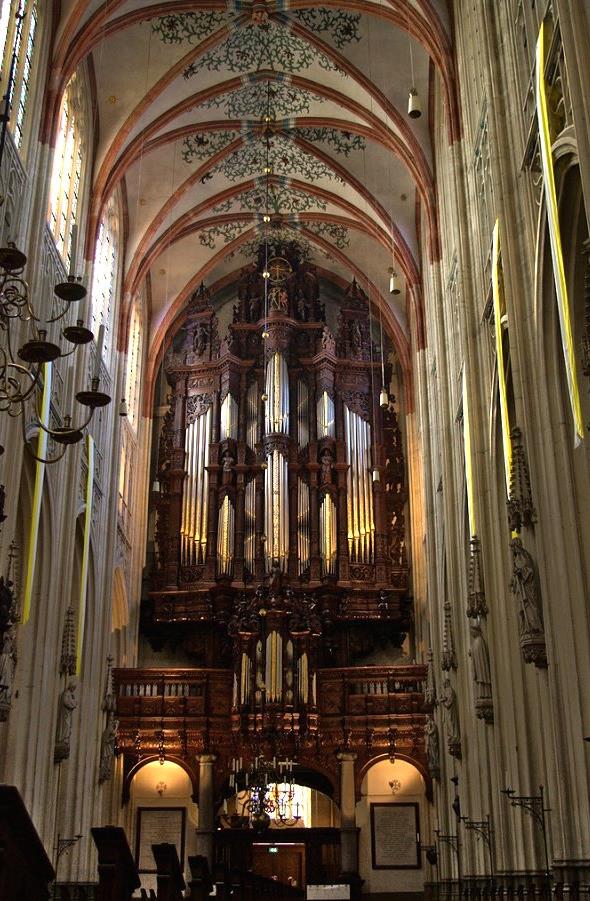
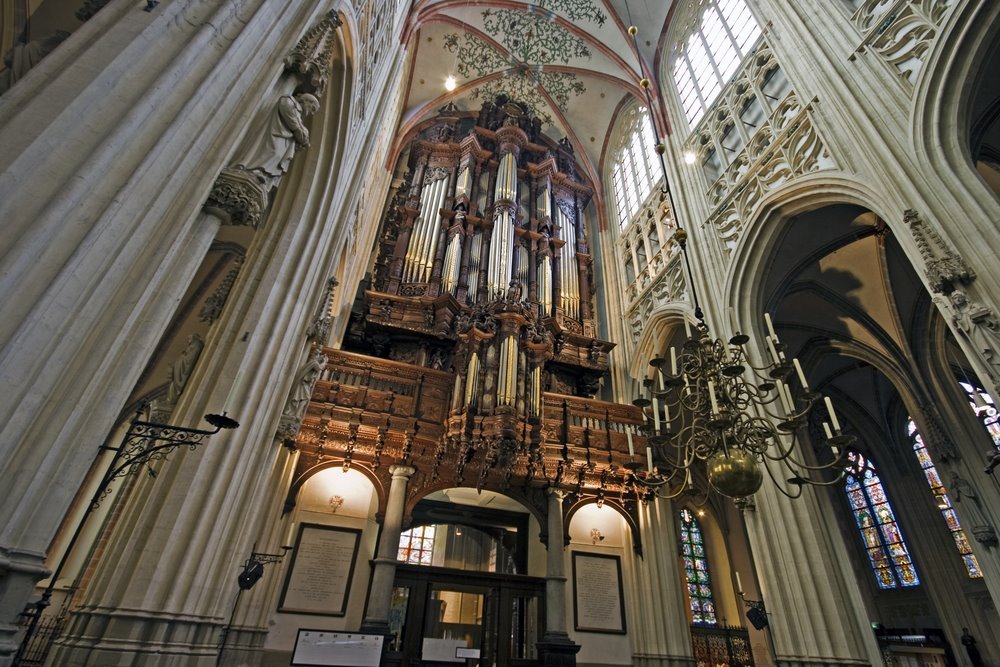
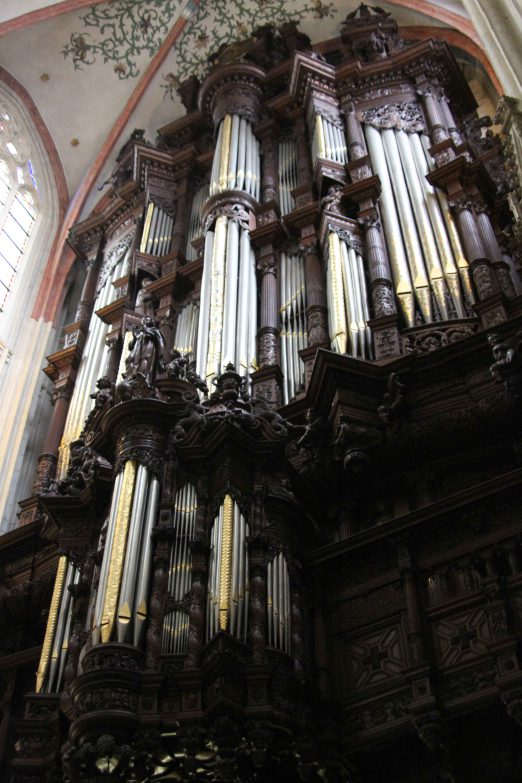
Located in St. Janskathedraal, Hertogenbosch, Netherlands. Its current disposition is three manuals and pedalboard with a total of 48 stops.
Florentius Hoque was the first builder. His work was not found suitable for the church and so, twelve years latter (1634) it was enhanced by Hagerbeer (father and son). It was then praised as “the organ that excels all others in the Netherlands”. During the 18th century the organ was enriched by Hoornbeeck in 1718 and Christian Müller in 1722, which made of it the magnificent organ it is today. However, it became dysfunctional by the end of the century. It underwent numerous transformations from then on, going from rococo-classicism styles to 20th century pneumatic action. In 1984 the Dutch Firm Flentrop restored it to the state it reached after Müller’s work.
Contextual historical chronology
1605: Miguel de Cervantes (1547-1616) Don Quixote.
1607: Claudio Monteverdi (1567-1643) Orfeo’s first performance.
1616: Miguel de Cervantes (1547-1616) Decease on April 22nd.
1618: Start out of The Thirty Years’ War.
1621: Jan Pieterszoon Sweelinck (1562-1621) Decease on October 16th.
1635: Diego Velázquez (1599-1660) The Surrender of Breda.
1648: Westphalia Peace Treaty: End of The Eighty and The Thirty Years’ Wars.
Click on the thumbnails to open
Listen to this organ
 sesquialteramusic