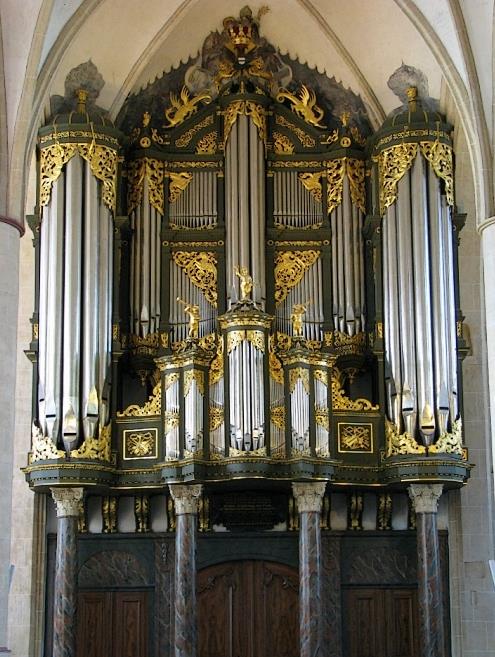
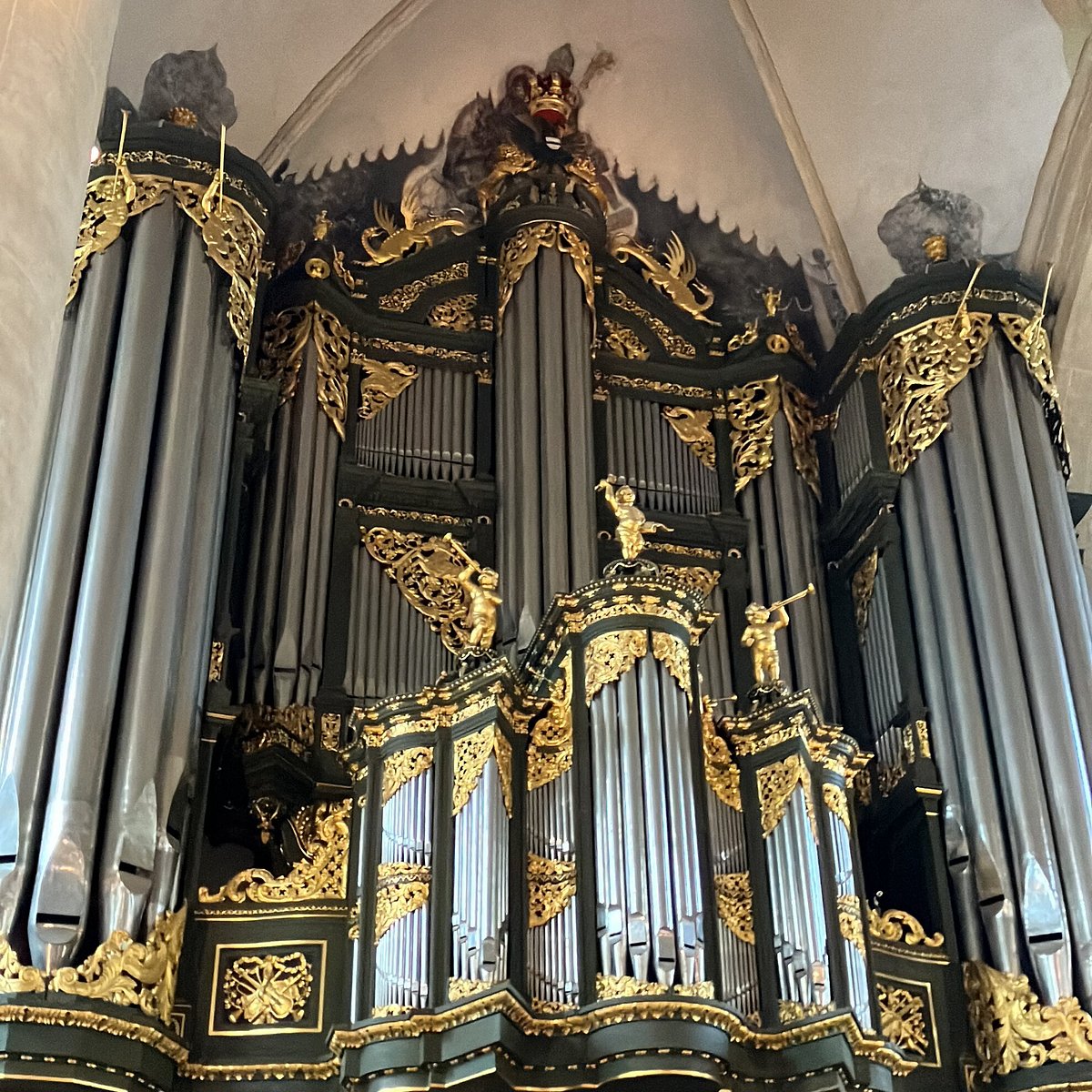
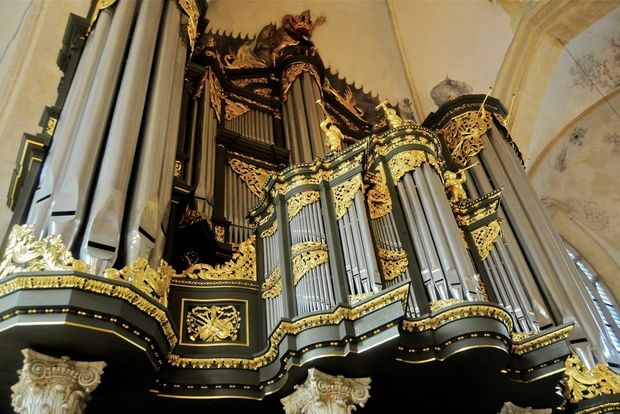
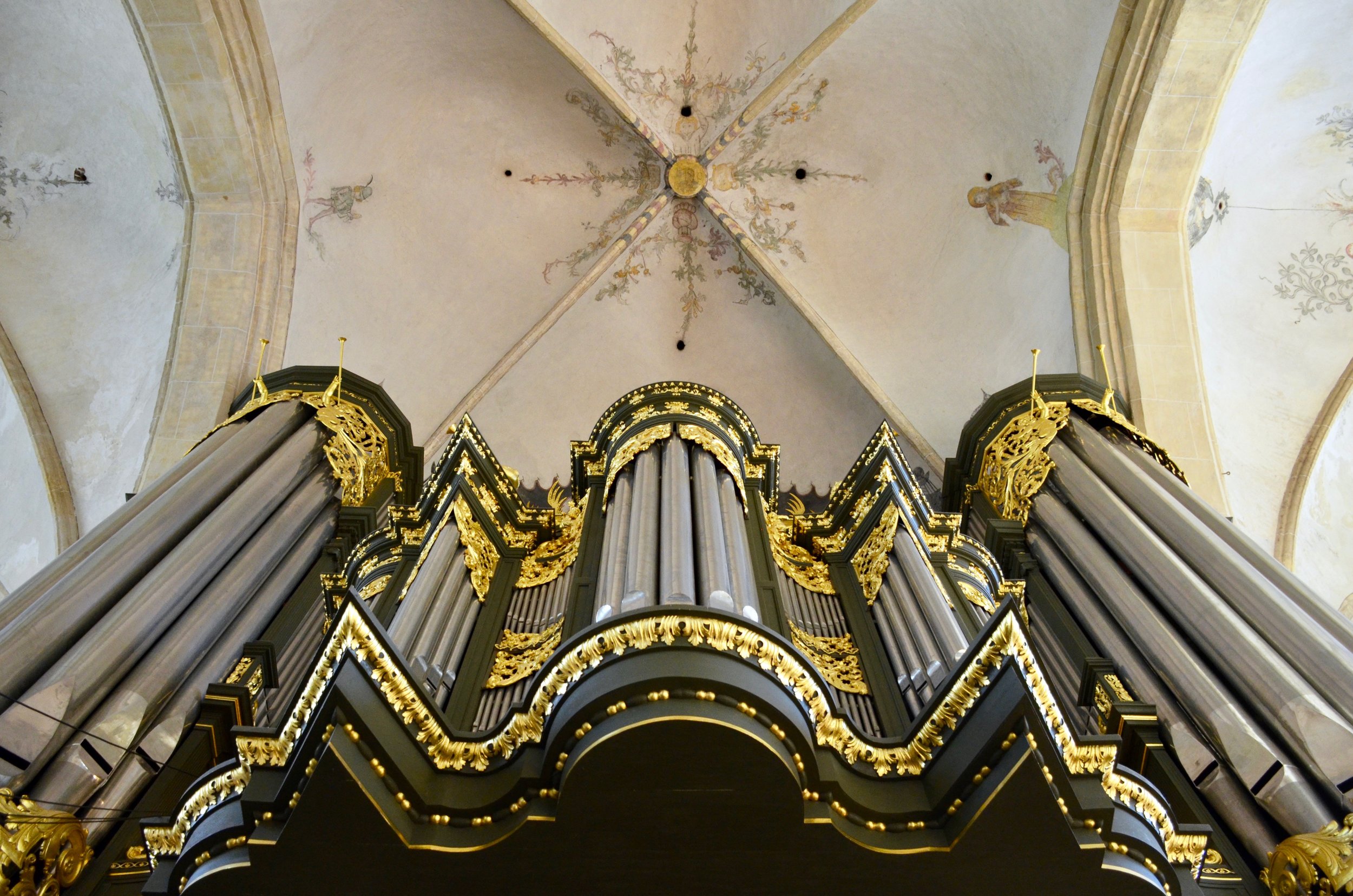
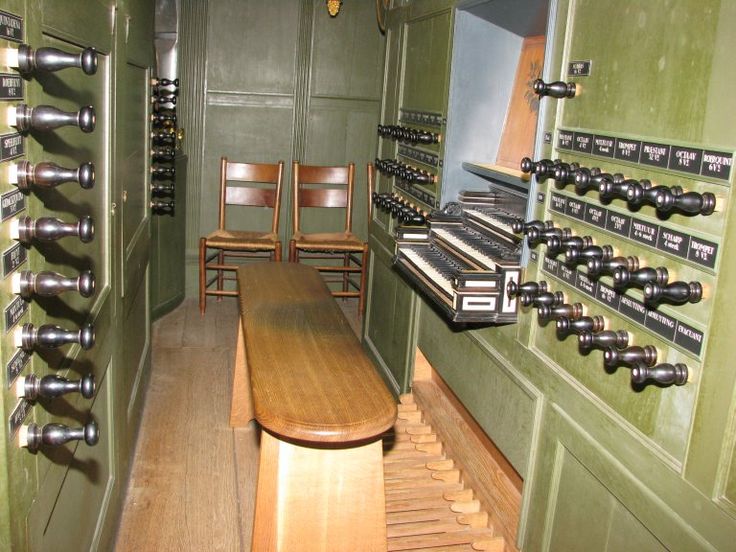
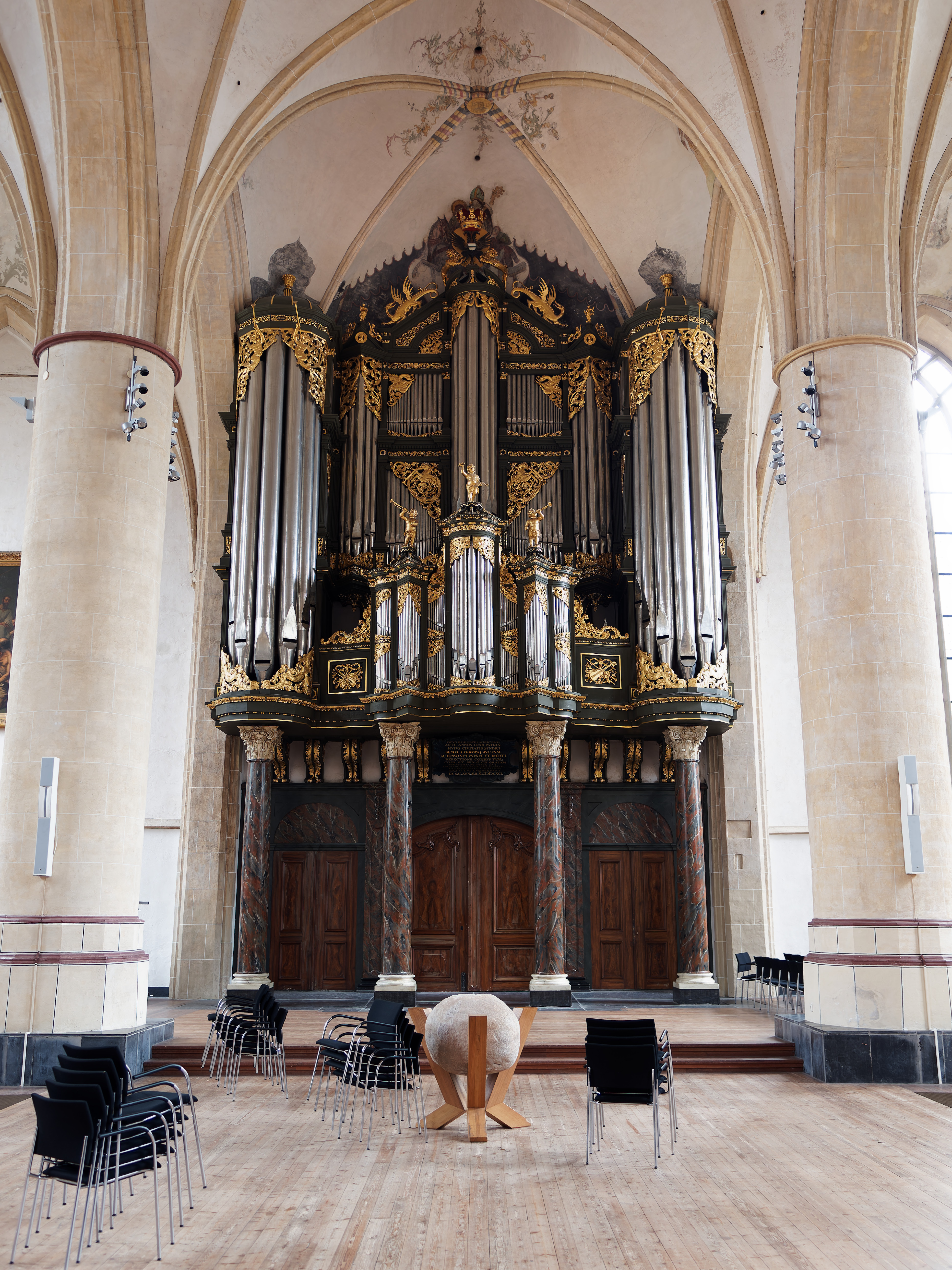
Located in the Martinikerk, Groningen, Netherlands. The current disposition is three manuals and pedal with a total of 53 stops.
The organ builder Jan Helman was working in the enlargement of the Renaissance Organ of 1542 when he died in 1690. It was up to Arp Schnitger to sort out the resultant problem. He kept pipework from the 1482 and 1542 Renaissance Organs. The full work was formally handed over in February 1692 and soon after Schnitger was commissioned to build two pedal towers including a 32′ Principal. The full work was completed by December of the same year, resulting in a large Baroque North German Style Organ. In 1728, the newly appointed organist Jacob Wilhelm Lustig suggested a restoration which included the addition of a new Rückpositiv, task that was entrusted to Schnitger’s son Frans Caspar. The latter died in 1729 and so the work was achieved by his journeyman Albertus Anthoni Hinsz. Hinsz reworked on the organ in 1740 when he added seven new stops to the Rückpositiv carrying out the whole number of stops to 47. The organ underwent appalling distortions during the 19th and mostly the 20th centuries, which ended up bringing about the total decay of the instrument making it not longer worthy of esteem as a historical organ. In 1971 the organ was dismounted and removed while the question arose whether a reconstruction would be meaningful. The master organ builder Jürgen Ahrend succeeded to turn the wreck into the magnificent instrument it is today. He worked on a two-fold schedule ranging 1976-77 and 1983-84.
Contextual historical chronology
1687: Jean-Baptiste Lilly (1632-1687) Decease on March 22nd.
1691: Henry Purcell (1659-1695) King Arthur.
1695: Henry Purcell (1659-1695) Decease on November 21st.
Click on the thumbnails to open


Listen to this organ
 sesquialteramusic