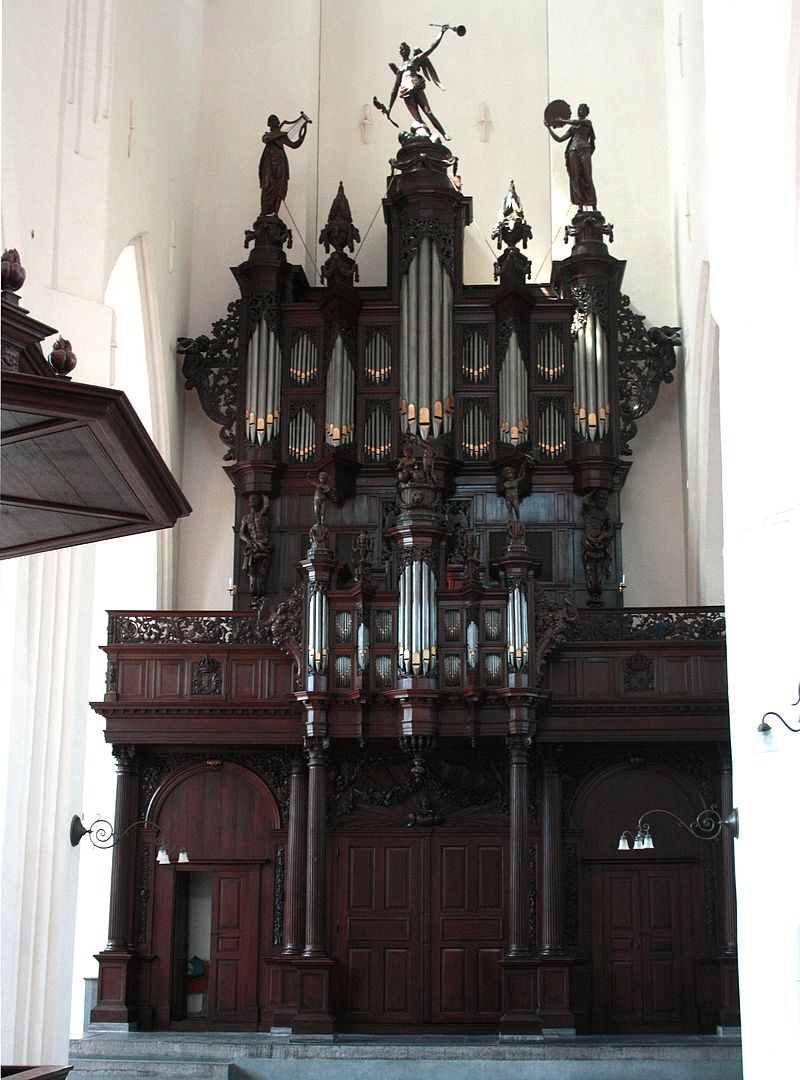
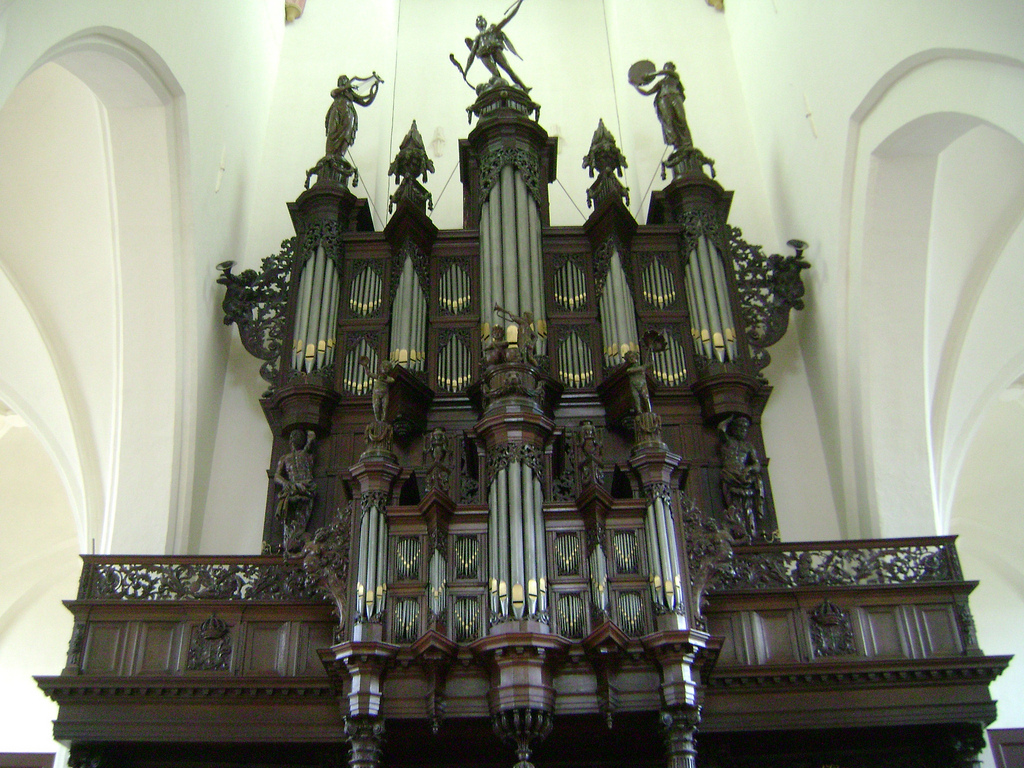
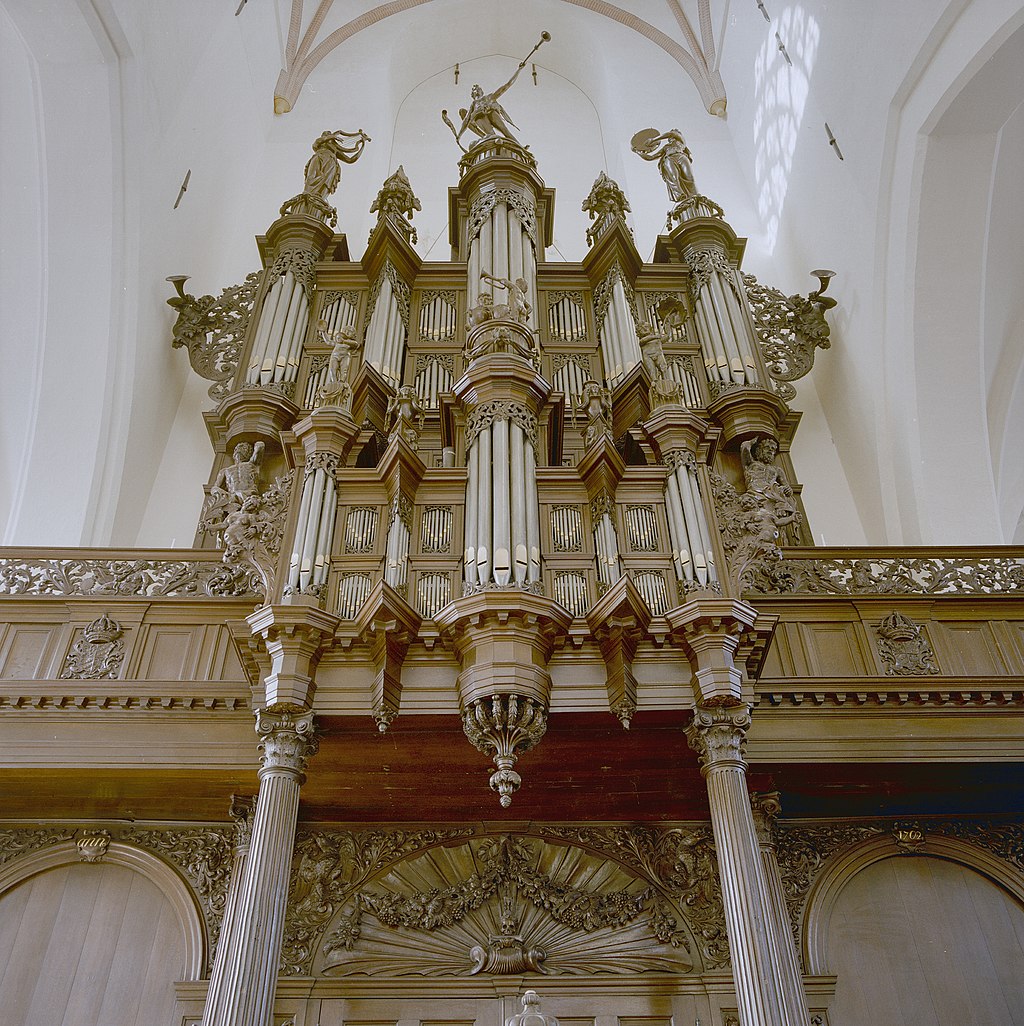
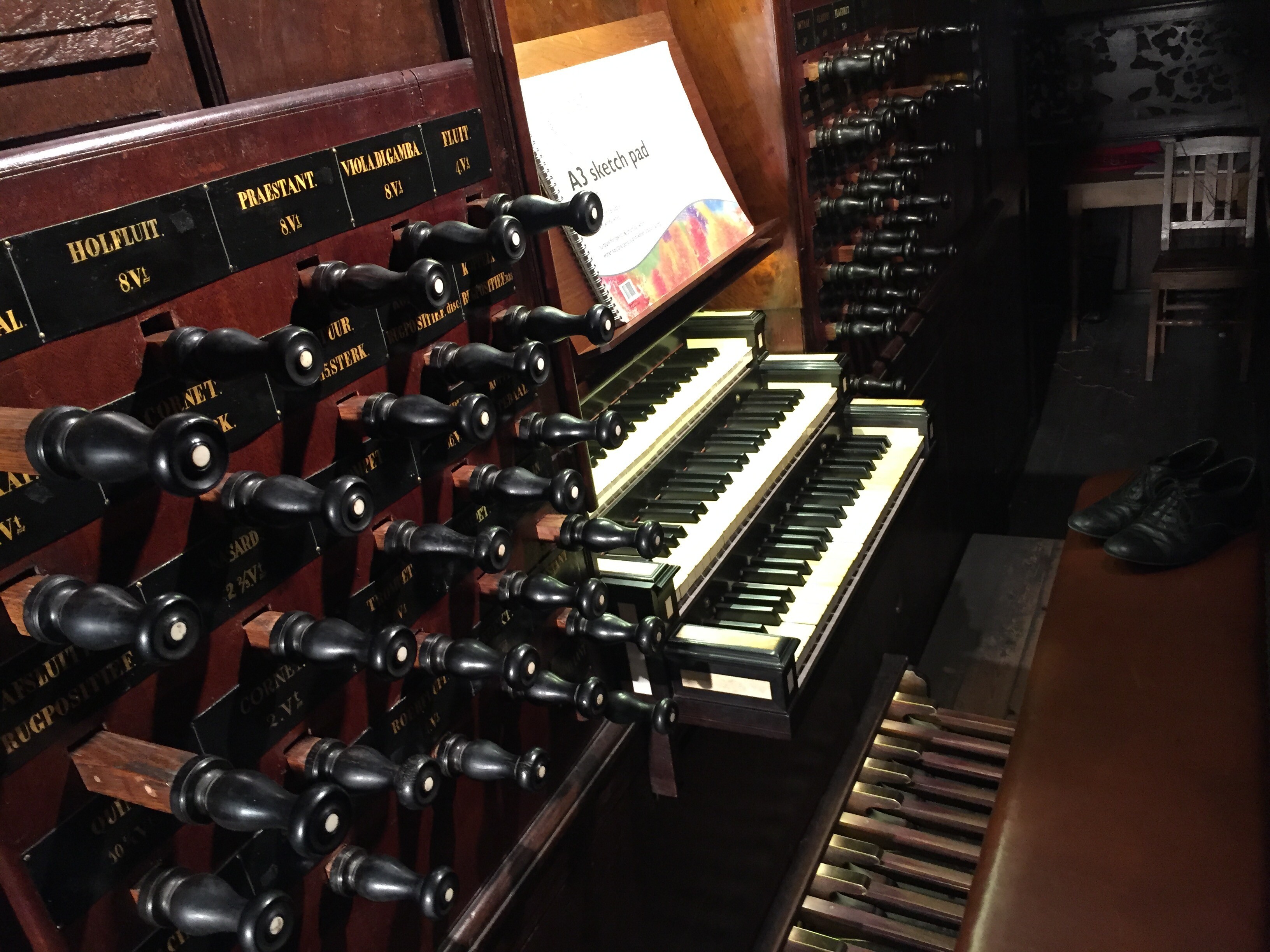
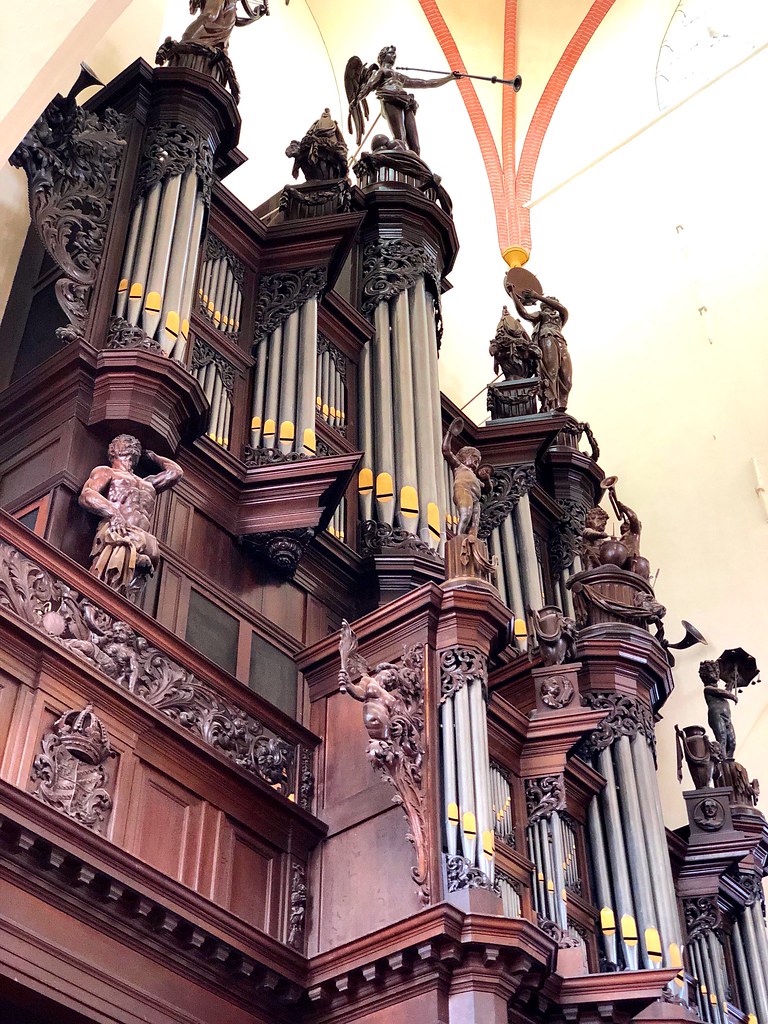
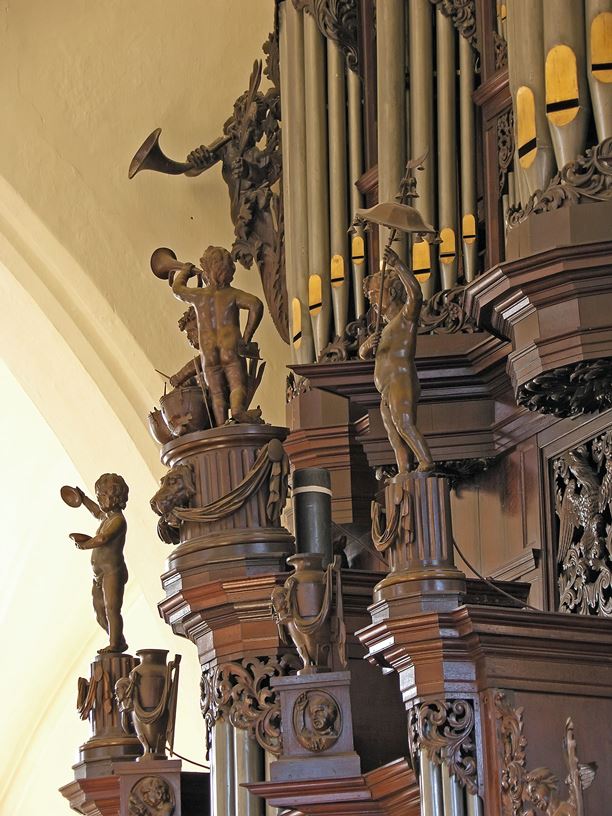
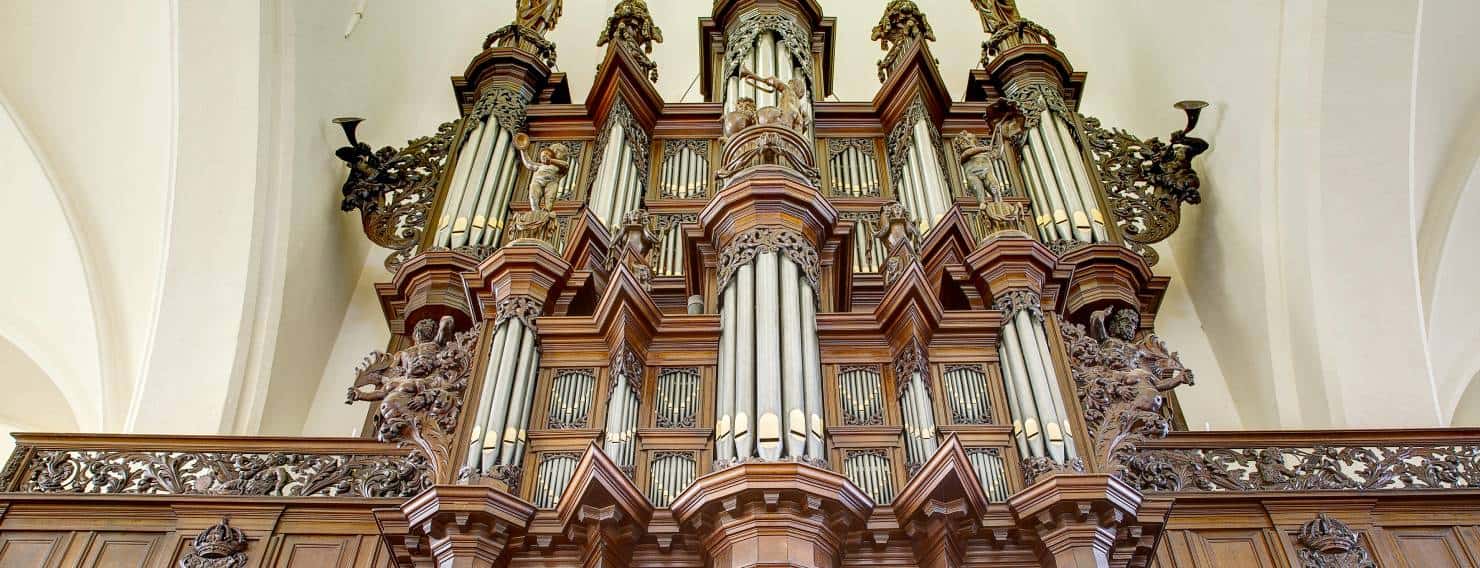
Located in the Aa-Kerk, Groningen, Netherlands, its current disposition is three manuals and pedalboard with a total of 40 stops.
The first organ in the Aa-Kerk was built around 1450 and later rebuilt in 1558 by Andreas de Mare I. A century later, in 1654, Faber was commissioned to build a new large organ which he could not achieve before his death in 1659. Jacobus Hagerbeer completed it in 1667, resulting in a three manual and pedal great organ with 40 stops, which fell victim of a fire in 1671. Arp Schnitger built a new organ for the church between 1694 and 1697, which was Schnitger’s largest organ in the Netherlands, with four manuals, pedalboard and over 40 stops. It was lavishly praised and Schnitger himself uttered about it: “I did not spare anything and made everything wonderful; I provided, beyond the contract, 6 stops on a special windchest, and this organ still deserves a little more“. Fate seized this organ through in 1710 when it was destroyed by the collapse of the tower. Henceforth, for over a hundred years the church did without organ.
During the same decade, between 1699 and 1702, Schnitger produced a new organ for the Akademiekerk (University Church) using material from a previous one of 1679, a large organ comprising three manuals and pedal with a total of 32 stops built by Hendrick Harmens van Loon and Andreas de Mare II, who, in turn, had reused material from an even older organ.
When the Akademiekerk was given to the Roman Catholic community in 1814, its organ was donated to the Aa-Kerk thanks to a donation from King William I. The Groningen organ builder Johannes Wilhelmus Timpe made the transfer and adaptation to the new place in 1815-16. Timpe rebuilt parts of the organ and renewed some stops by 1830. Later, during the second half of the 19th and mostly the 20th century, the organ underwent several transformations according to the taste of the time. From 1998 to 2011 Reil took over a reconstruction of the organ keeping it, as it was officially decided, in the present state. The full-bodied and colourful sound accounted for that decision ; inasmuch, as more than half of the original Schnitger stops and many of the ones by de Mare survived. It is today considered one of the most important Baroque Organs in Northern Europe since its old stops are perfect match to the Gothic church acoustics.
Contextual Historical Chronology
1701: The British take Gibraltar from Spain.
1704: Johann Sebastian Bach (1685-1750) First Cantata.
1706: Johann Pachelbel (1653-1706) Decease on March 3rd.
1707: Dietrich Buxtehude (1637-1707) Decease on May 9th.
Click on the thumbnail to open
Listen to this organ
 sesquialteramusic