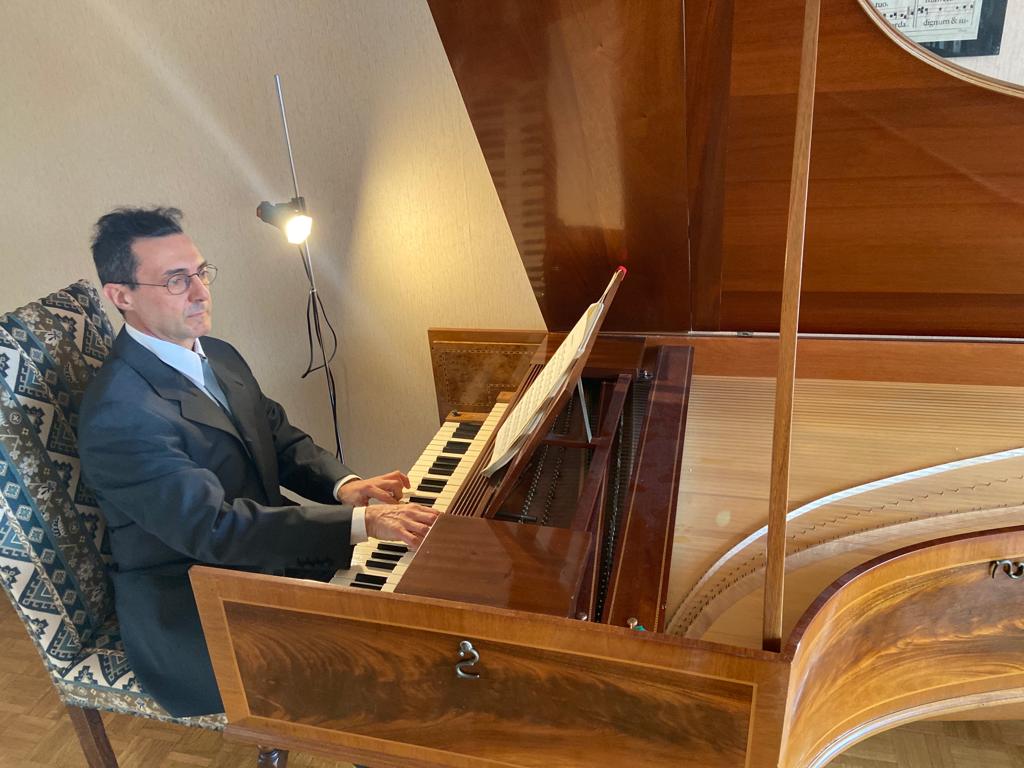
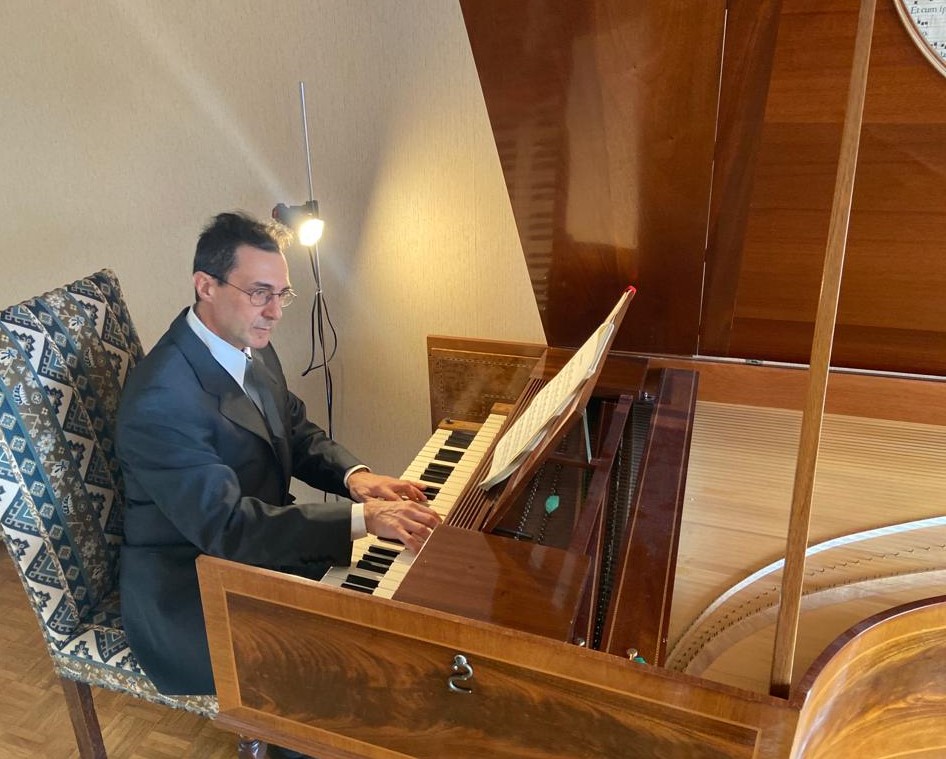
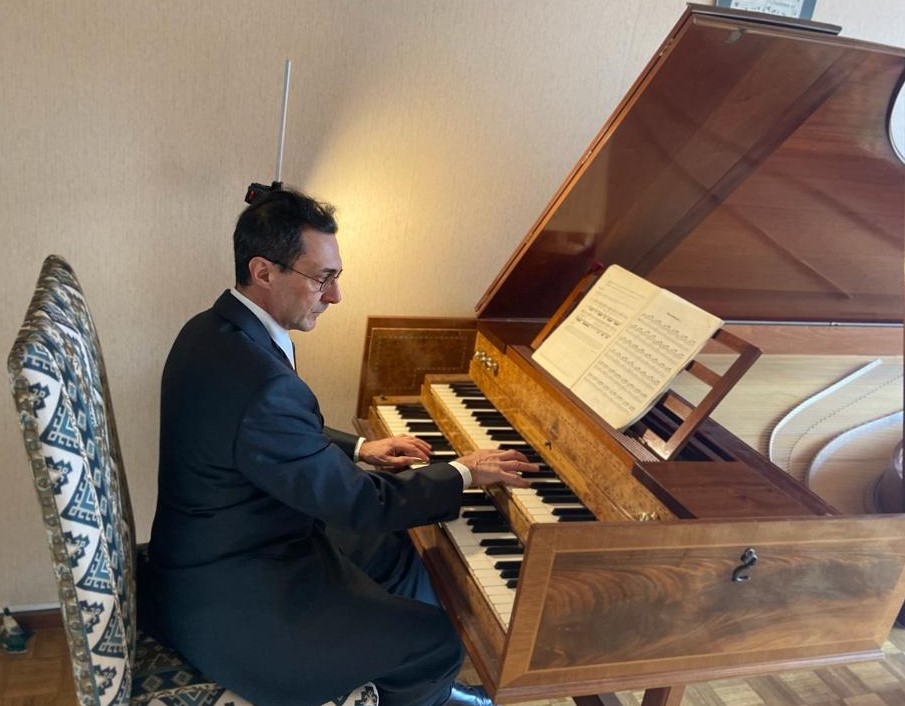
John Morley’s Kirkman harpsichord
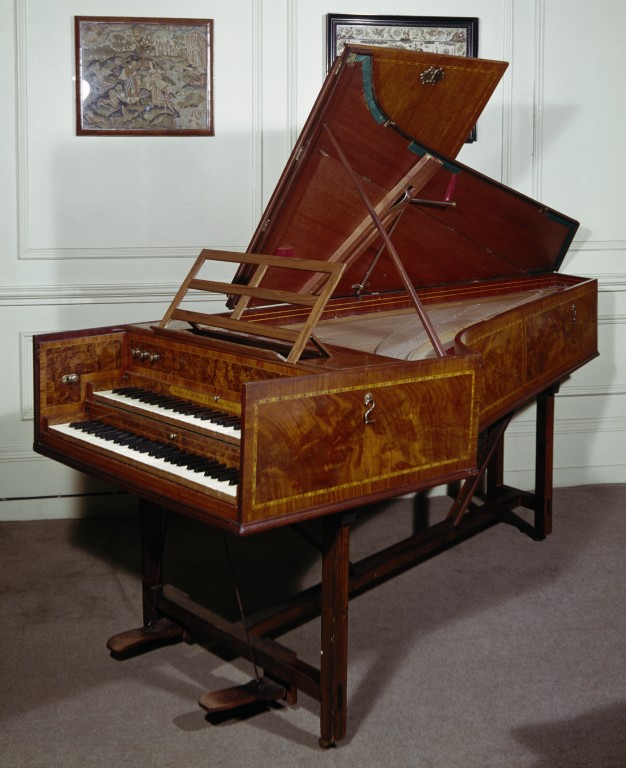
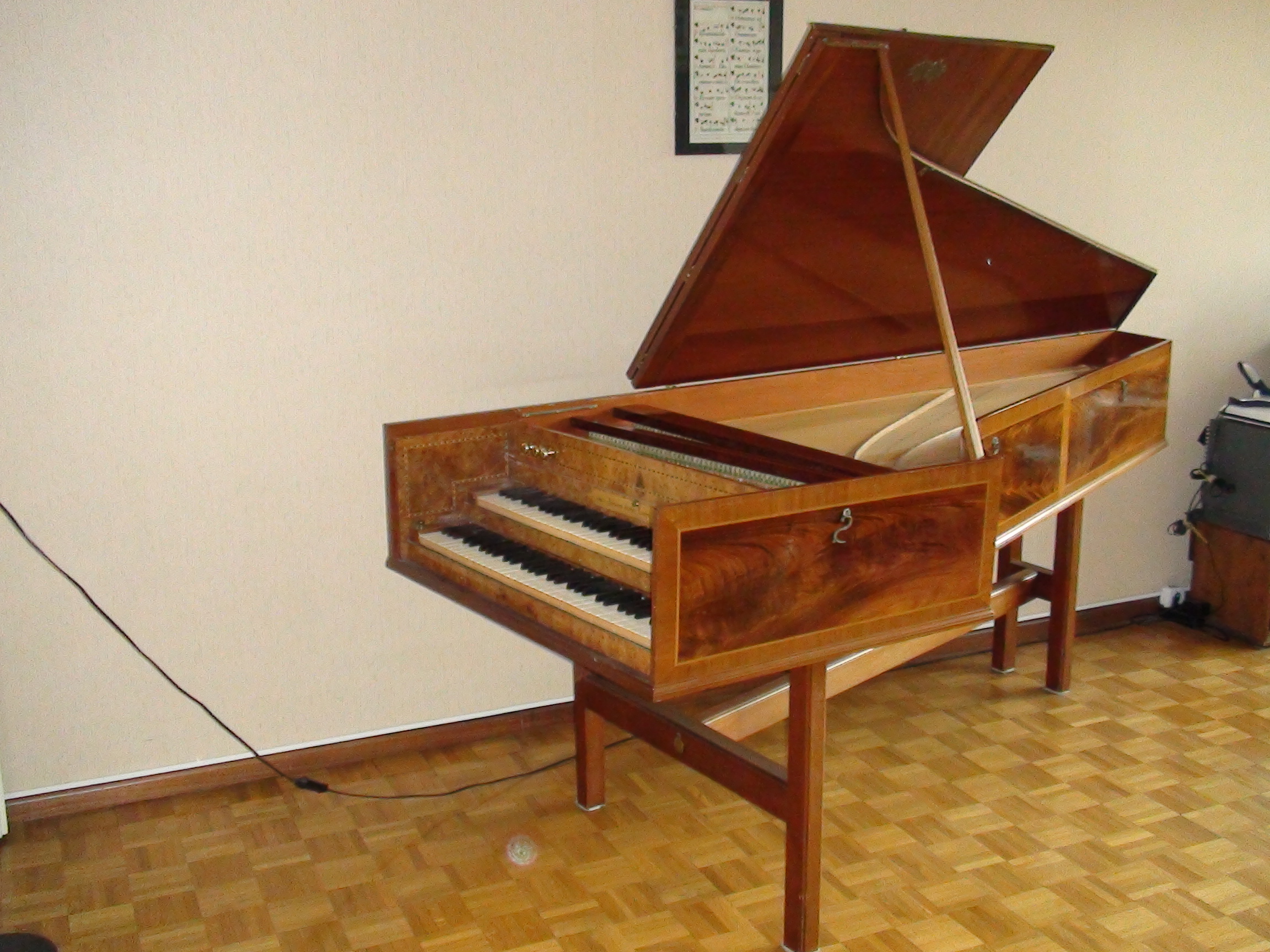
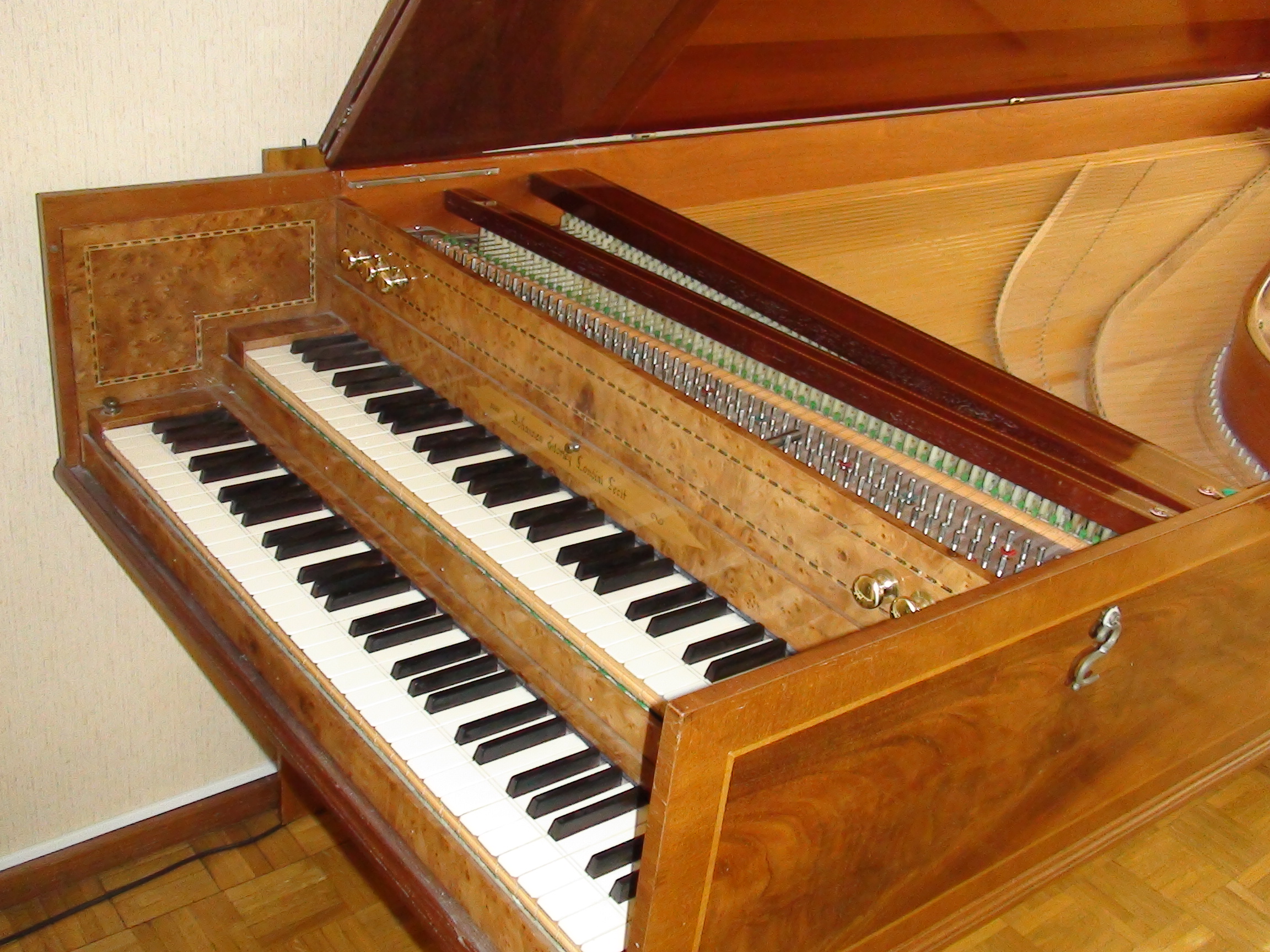
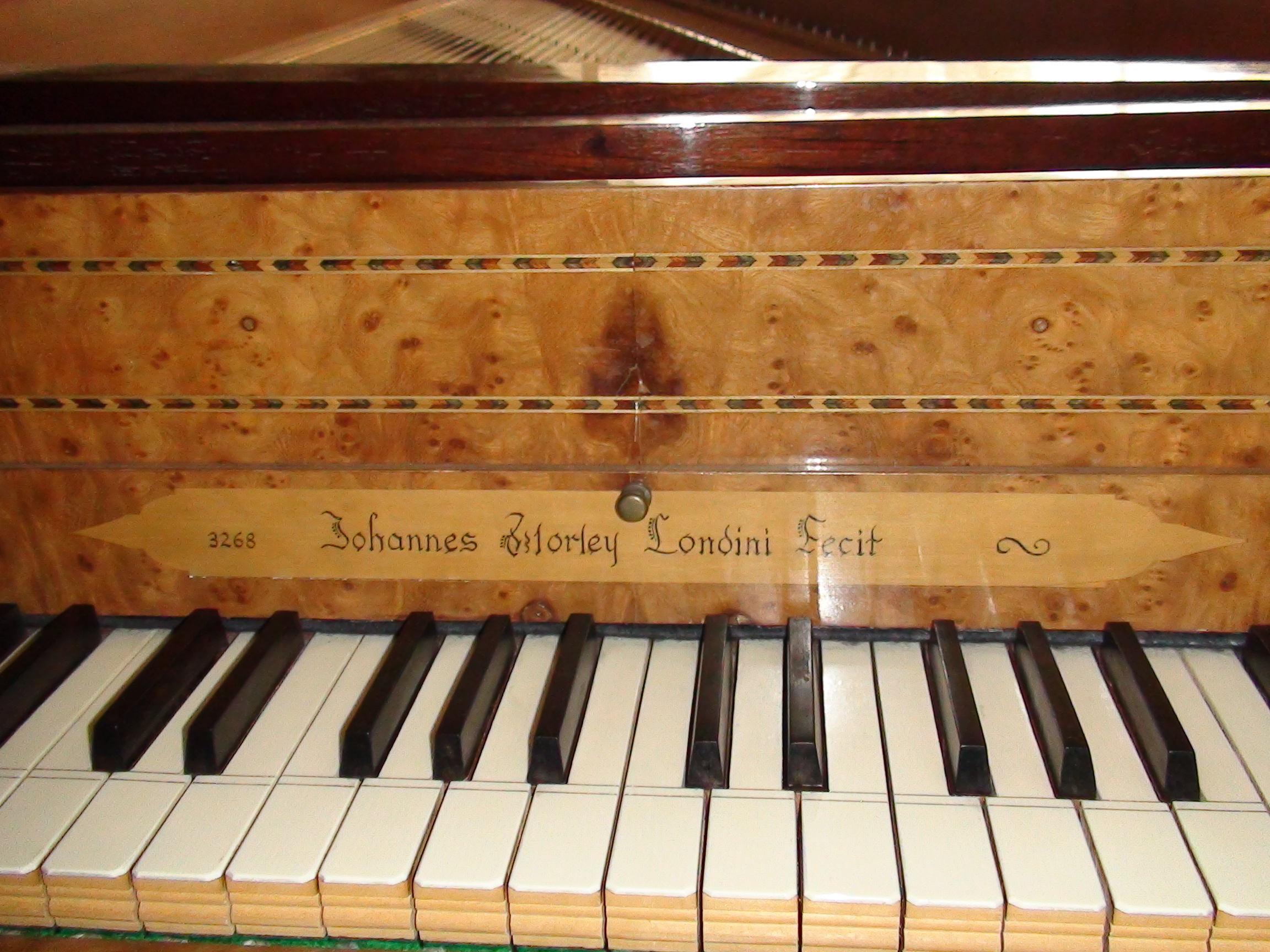
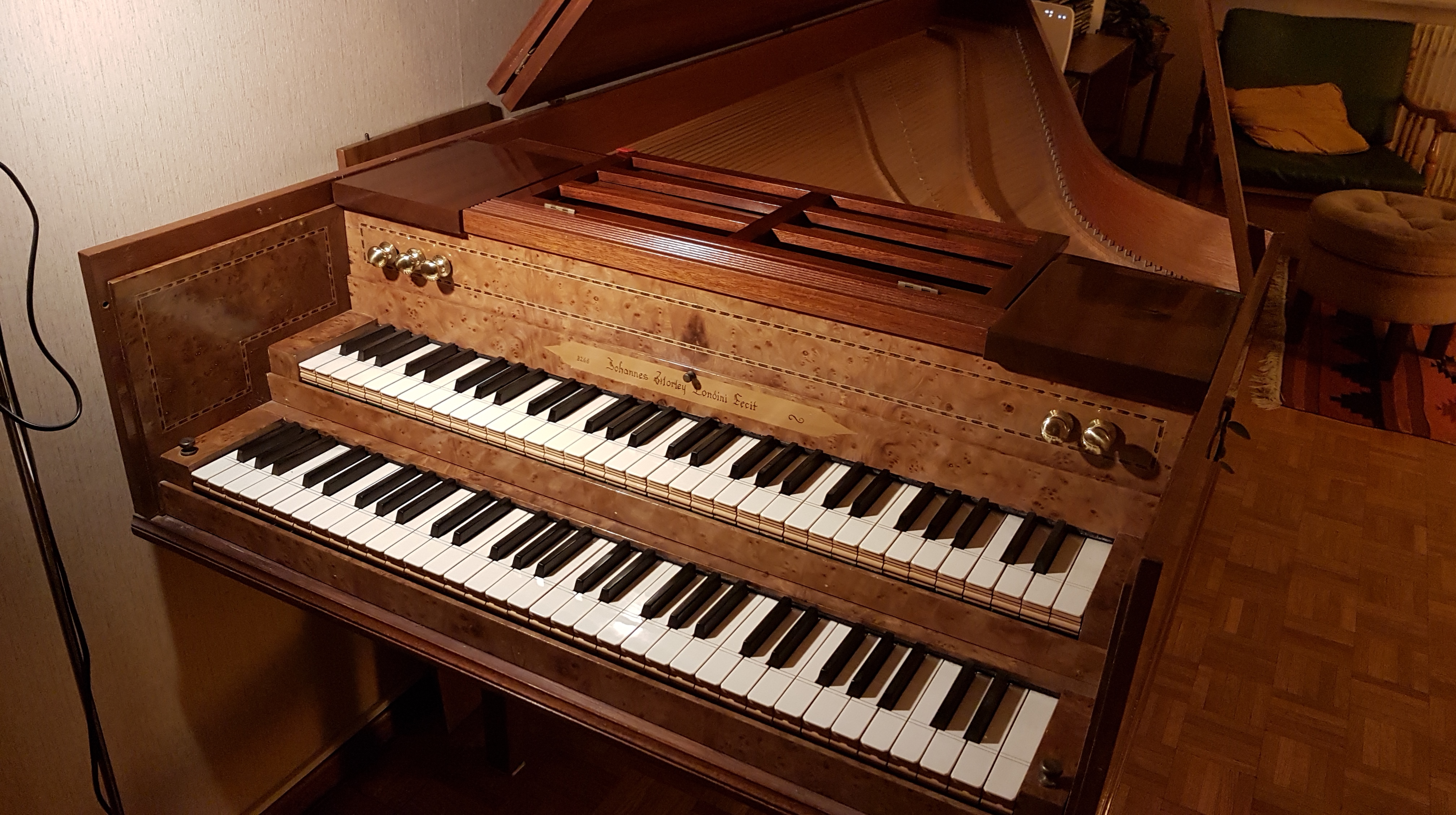
It is an accurate copy after a 1760 Jacob Kirkman’s made by the Londoner harpsichord maker John Morley in 1993. Jacob Kirkman (anglicized Kirckman) (1710-92), an Alsatian of Swiss extraction, stablished in England in the seventeen-thirties and was instructed by Hermann Tabel into the Flemish harpsichord making tradition of Ruckers-Dulcken. He improved Dulcken’s dog-leg action by contriving a device that enables coupling and uncoupling both keyboards at will by sliding the lower manual back and forth (contrariwise to the French mechanism which does so by sliding the upper keyboard). The coupling takes place in the inner mechanism and not at the keyboard level like in French harpsichords. This contraption allows playing music conceived for two manuals at the same dynamic level (i.e. some of the Goldberg Variations), thus overcoming Dulken’s main shortcoming. According to Spitta, the German 19th century historian, however, the aforementioned device had been formerly conceived by Johann Nikolaus Bach (1669-1753) of Jena, cousin twice removed to Johann Sebastian Bach, musician and instrument maker. Kirkman was the most reputed harpsichord maker of the second half of the 18th century, his harpsichords being the most sought out not only within the British boundaries but also over the continent albeit they were considerably more expensive than those by his contemporaries. Jacob Kirkman made four harpsichords in the year 1760 of which only one with two keyboards bearing the number 12 (last known owner M. Ekstein since 1968). For his 1993 copy Morley took after the characteristic features of the original, namely, 240 cm case length; two keyboards with enhanced dog-leg action; five stops: two 8 foot, one 4 foot, nasard and lute (yielding a total of over 16 possible combinations); ivory and ebony diatonic and chromatic keys respectively; brass stop lever heads; brass shaped hinges; no rose; solid mahogany stand and lid. Morley veneered the case entirely with mahogany instead of the burr walnut of the original. However, he used burr walnut for the front piece over the keyboards. Depicting Kirkman’s use, the front piece bears the inscription “Johannes Morley Londini Fecit” (made in London by John Morley) sided by the record number 3268. It belongs to the category of the great Flemish harpsichord befitting the last third of 17th and the whole 18th century German and French repertoires.
Click on the thumbnails to open
 sesquialteramusic